|
Small Is Beautiful, a decade long plan, started in 2004 has for primary objective to assist the Tuvaluans to survive as a nation, and if possible, to allow them to remain on their ancestral land. Tuvalu is symbolic on many levels. The idea is to start from this tiny example to develop a program of constructive action – one which is replicable and likely to garner the necessary media attention. Tuvalu, a tiny and extremely low-lying nation, is the epitome of vulnerability. It is also, due to its small size, recent habits of consumption, and traditional relationship with nature, a perfect candidate for becoming the first country to operate in harmony with the environment, an environmental showcase of the earth, a living ideal for the planet to emulate.
A media campaign based on a positive, unifying and concrete program: assisting Tuvalu, as its own destruction approaches, to become an environmental showcase - a living, breathing, replicable model of an environmentally respectful and exemplary nation - is a compelling means for Tuvalu to leave both a vital message and an important legacy to the world.
To help Tuvalu become a model of an environmentally respectful nation means working and coordinating with each of the main areas of sustainable development in harmony with the local ecosystem and natural resources : Energy, Water (drinking and waste water), Waste, Atmospheric emissions, Erosion and Biodiversity, which may have also positive consequences on food quality and human health.
The first step of the program consisted of obtaining Tuvalu’s people and government participation and support for the project. It coincided with a request from the Tuvalu government to the French foreign affairs for assistance on Renewable Energy.
The second step is a Renewable Energy preliminary study which started, with a 6 week field trip, in 2005, by Sarah Hemstock and Pierre Radanne.
The third step is to create an environmental and training micro-model for renewable energy on
Amatuku.
TUVALU RENEWABLE ENERGY STUDY
This Tuvalu renewable energy study is probably the most thorough report on the subject made in the region. Hundreds of studies and government finance data, 20 years of agricultural reports and 50 years of wind measurements were analyzed and over 100 people consulted (see enclosed list). If the study has yet to be finalized by Sarah Hemstock and Pierre Radanne, some of the main conclusions and recommendations can be summarized.
- 
- 
- 

Main conclusions
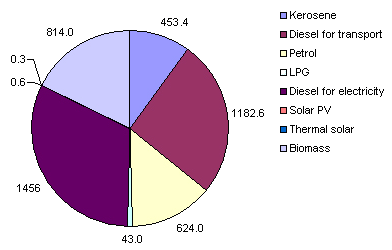
Tuvalu is close to a 100% oil economy
The primary energy consumption represents the upstream supply (Fig. 2). The only national source is firewood at around 18% based on our 2005 study (photovoltaic and thermal solar are insignificant). The balance of supply is oil. The high level of oil imports dependency mainly for the transportation sector and electricity generation greatly demonstrates Tuvalu specificity. The level of consumption stems from the high needs for sea transport which represents around 40% of the total use. Energy needs in Tuvalu have increased since the construction of the new hospital in 2003 offered by Japan, and the government building in 2004, a gift from Taiwan. A Japanese team is presently implementing 3 new fuel generators. Production will exceed the needs and will go against Kyoto’s directives, who’s goal is to reduce global warming gas emissions before 2012.
This situation is now more worrisome than ever as the world is facing a new oil crisis. Prices will drastically increase in the next decades. If the whole world will have to cope with this, the small pacific islands will be faced with an even greater problem.
Renewable Energy is under used
If Tuvalu was a pioneer in photovoltaic (PV) solar energy more than 20 years ago, lack of maintenance and management failure have today made PV use insignificant.
Potential of other locally available renewable resources such as wind, biofuel (coconut oil biodiesel) or biogas is not exploited at all yet in Tuvalu and not much elsewhere in the Pacific.
Other indigenous resources, such as copra and organic waste are very much under used. Copra production which was developed for export purposes collapsed. Mainly due to distances, Tuvalu’s production is not competitive.
Other topics
Concerning municipal solid waste : apart from aluminium cans which are compacted and shipped to New Zealand, all imported waste stays on site. 70% of the waste volume is organic.
Due to sea water contaminated soil, taro’s culture has been replaced by imported food.
Rain water is the only source of drinking water. Water tanks are multiplying but not everyone is able to buy them. Only 64% of the population is boiling the water before drinking. 40% use firewood, the remaining 60% comes from oil. The only desalinisation plant, on Funafuti, is often out of order.
Waste water is hardly taken care of. Drainage work is rudimentary. Very recently, the presence of smelly seaweeds in the lagoon could mean that the marine eco-system is already contaminated.
Some of the RET study’s recommendations
To help Tuvalu to become more oil independent by developing in priority biomass energies using waste for biogas and coconut for providing biodiesel for ships.
To carry out additional wind measurement to better evaluate Tuvalu’s wind power potential.
To consolidate existing solar installations to optimize the network.
In the past, a number of projects initiated in the Pacific and other small or isolated communities, ultimately failed due to lack of effective training and maintenance follow-through. To avoid past pitfalls, it is recommended to create, a hands-on experience and micro RET’s “showroom”/training center for the Tuvaluans…and an effective, practical 1st step on the way to an expanded national program.
Agreements, supports and contracts
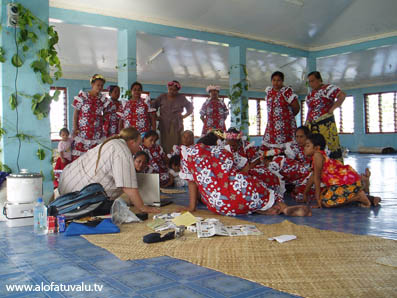
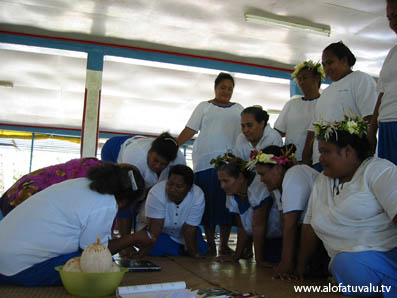
Consultation meetings were organized with 9 women’s groups (300 women), which were very positive - committing support to biogas technology, offering community owned land to site the plants and enthusiastically agreeing to be trained to use and maintain the equipment.
Following our first draft presentation, the government of Tuvalu, in the name of its Minister of Energy and Transportation, officially asked Alofa Tuvalu to pursue its work. In parallel, a contract was signed with TMTI, Tuvalu Maritime Training Institute, to implement a micro model on Amatuku. In March 2006, the study and the micro-model project were presented to Cabinet and discussed at parliament.
Furthermore, meetings with 200 Tuvaluan copra producers demonstrated overwhelming support and showed economical commitment for revitalizing copra market via biodiesel production.
FOR FULL STUDY please contact us

OTHER
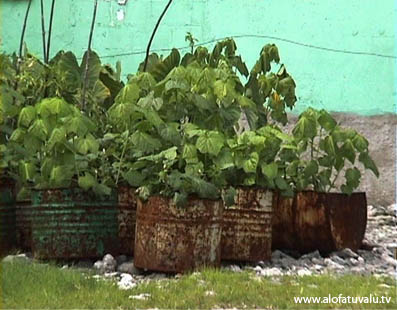
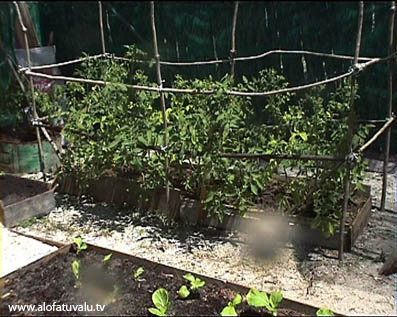
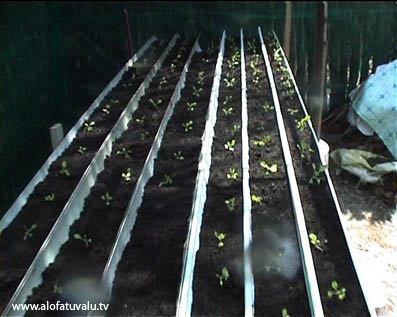
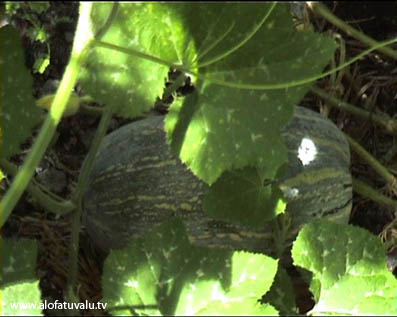
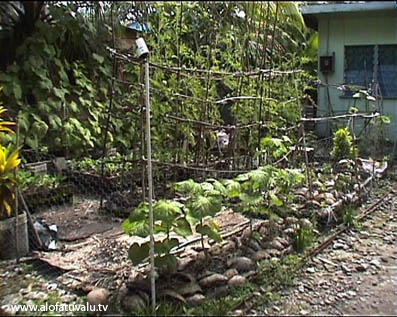
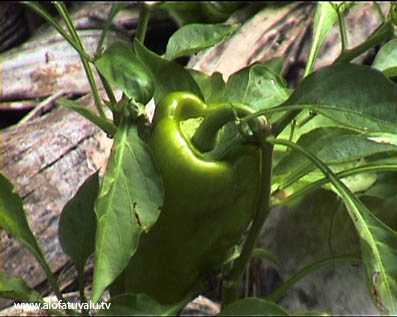
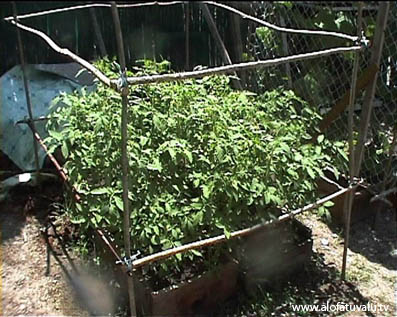
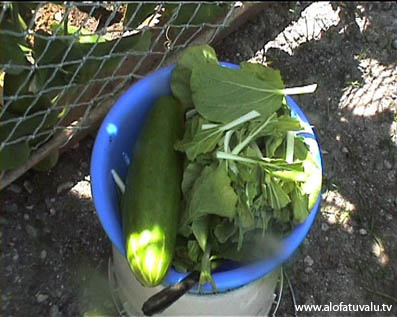
- Regular organic seeds handing out and awareness raising about gardening, compost, biogas :
Watch 2006, Organic seeds distribution, on YouTube
Watch 2006, 3 Community meetings on biogas, on YouTube
-
Yearly picture exhibition of shots taken by Alofa Tuvalu during the previous trip
- Launching of a Tuvaluan International Francophone Press Club (UPF)

|



 (in french)